
Dr. Emily Carter
Specialist Orthodontist
5 Min Read
Orthodontics
Can Adults Still Straighten Their Teeth Successfully?
Age isn't the barrier people assume it is.
Teeth can move at any age as long as the surrounding gums and jawbone are healthy. Adult orthodontics is now one of the fastest-growing areas of dentistry, and the results are just as reliable as they are for teenagers.
Why the "too old" myth persists
Braces used to be marketed almost entirely to teenagers, so adults grew up assuming treatment had an age cutoff. Biologically, that cutoff was never really true.
What's actually different for adult treatment
Adult jaws have stopped growing, so some corrections take slightly longer than in a teenager whose bone is still developing. Existing dental work, like crowns or missing teeth, also needs extra planning before treatment starts.
What stays exactly the same
The core process — gradually moving teeth with controlled, gentle pressure — works the same way at 45 as it does at 15. Healthy gums and bone respond to treatment regardless of age.

Modern options go far beyond metal braces.
One of the biggest reasons adult orthodontics has grown is that patients no longer have to choose between straight teeth and a mouth full of visible metal.
Clear aligners
Removable, nearly invisible trays that are swapped out every one to two weeks, popular with adults who want to straighten discreetly while working and socializing as normal.
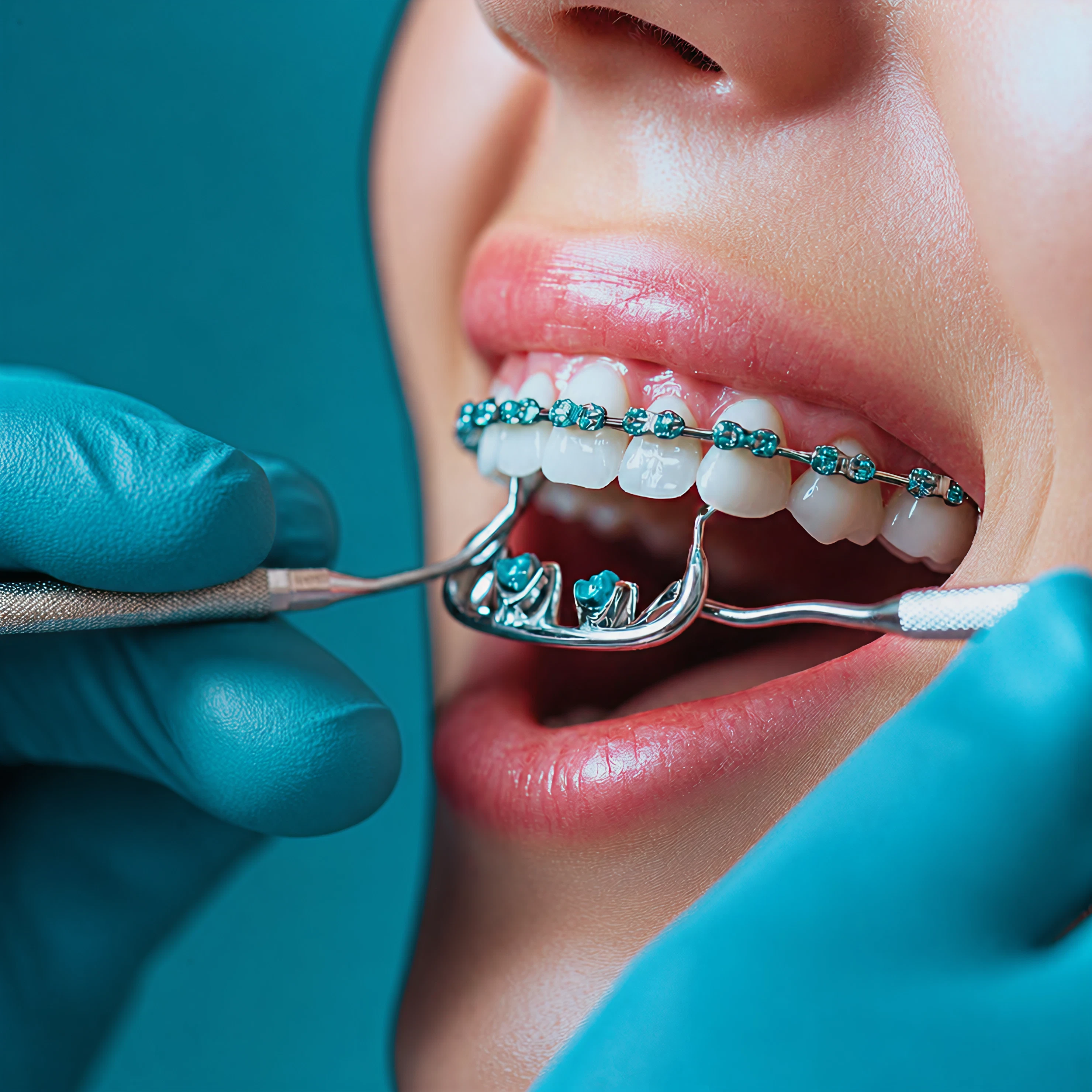
Ceramic and lingual braces
Ceramic braces blend in with your natural tooth color, while lingual braces sit behind the teeth, out of sight entirely, for patients who want a fixed option without the visible look.
What affects your timeline
Minor crowding might resolve in 6-9 months with aligners, while significant bite issues can take 18 months or more, regardless of which method you choose.
The benefits go beyond how your smile looks.
Straightening as an adult often solves problems that have quietly been building for years, not just cosmetic ones.
Easier to clean, harder to decay
Straighter teeth have fewer tight, overlapping spots for plaque to hide, which lowers the long-term risk of both decay and gum disease.
Less strain on your jaw
An uneven bite can quietly overwork your jaw joint for years. Correcting the alignment often eases jaw tension, clenching, and related headaches.
Curious What's Realistic For Your Smile?
Come in for a consultation — we'll assess your teeth and bite in person and walk you through a timeline and set of options that actually apply to your case, not a generic estimate.